What Is Off-Grid Living and Is It Right for You?
Understand the lifestyle, different levels of independence, and common beginner mistakes.
A PRACTICAL DIY GUIDE TO SELF-RELIANT LIVING
The Off-Grid Survival Manual
A practical roadmap covering land, finances, housing, energy, water, sanitation, food, livestock, preservation, health, tools, maintenance, and community.
Off-grid living is not simply leaving the grid. It is learning how the systems around you work — and preparing to maintain them.
The book starts with the decision itself, then moves through the money, land, infrastructure, skills, food, health, and community considerations of a settled off-grid lifestyle.
WHAT THE BOOK COVERS
The book begins by asking whether off-grid living is right for you, including the physical work, maintenance, isolation, research, problem-solving, and financial commitment involved.
From there, it develops the major systems of a permanent, settled off-grid home: independent power, water and waste systems, a productive garden, practical skills, and connections with other people.
Assess whether the lifestyle fits your needs, abilities, expectations, and budget.
Consider land, zoning, water, climate, access, energy needs, and housing before building.
Work through power, water, sanitation, food production, preservation, tools, and maintenance.
Include health, emergency communication, community, barter, security, and a move-off-grid checklist.
WHO IT IS FOR
THE ROADMAP
Move from the decision to the infrastructure, then to the practical skills and relationships needed to keep the system working.
Understand the lifestyle, different levels of independence, and common beginner mistakes.
Consider setup costs, financing options, incremental development, and ways people generate income.
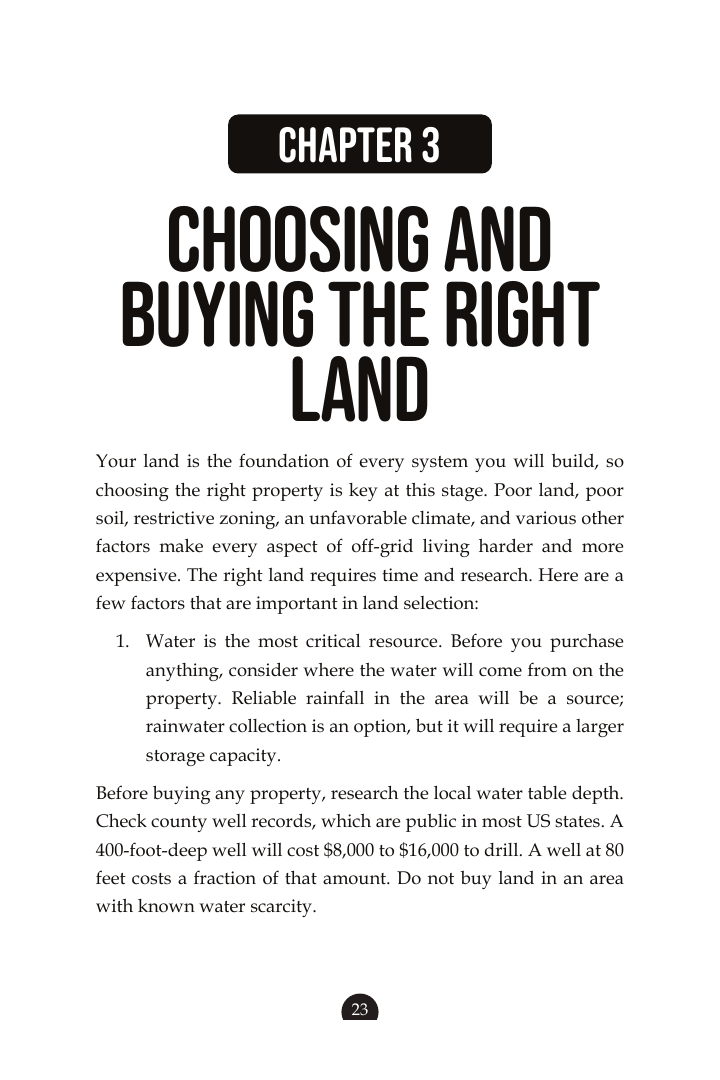
Explore due diligence, site visits, land and water rights, easements, and signs of risk.
Look at beginner housing, systems location, heating, insulation, and hot-water considerations.
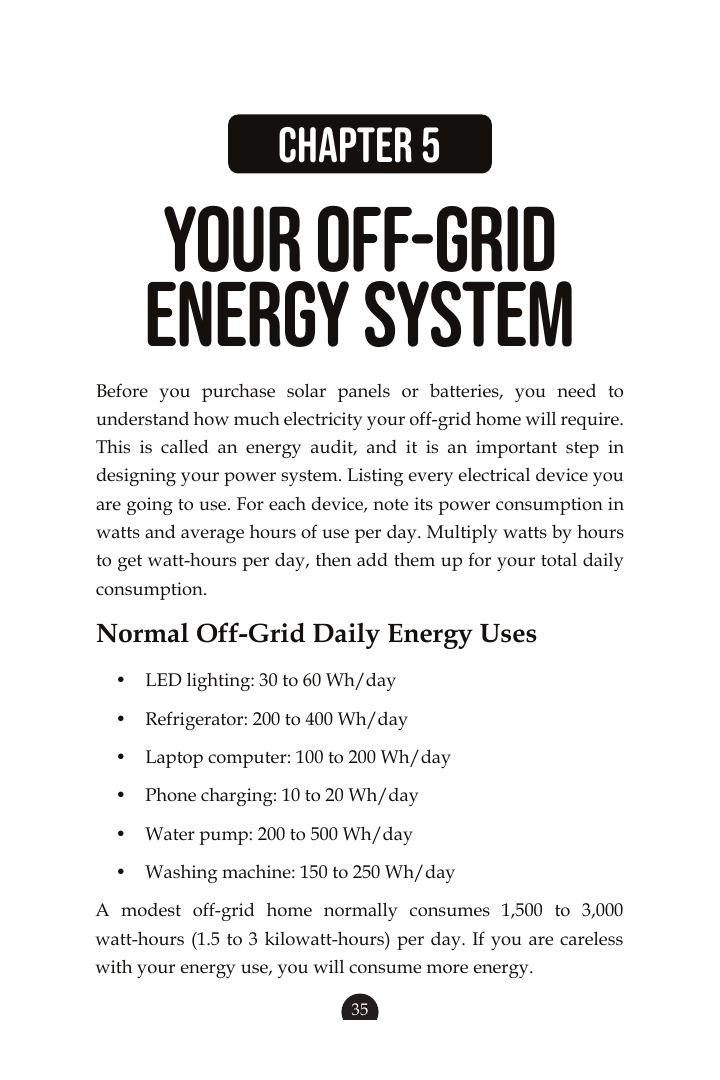
Start with an energy audit and explore solar, wind, micro-hydro, batteries, and generator use.
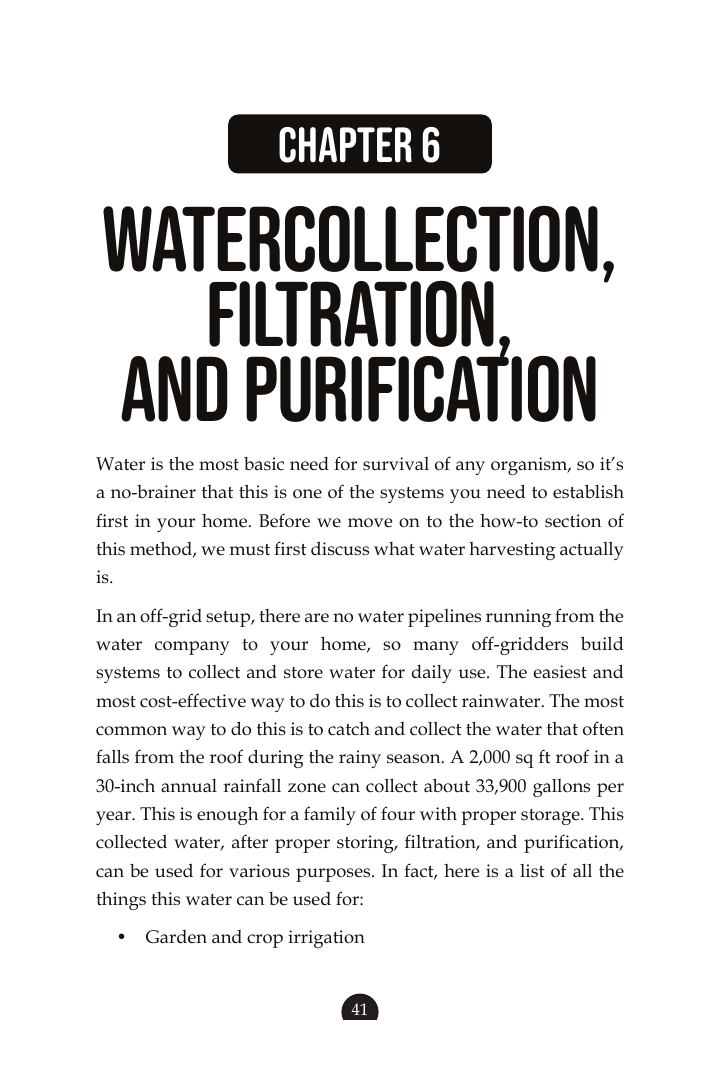
Plan collection, storage, filtration, purification, winter protection, and wastewater considerations.
Cover composting toilets, greywater, solid waste, non-organic waste, and drainage.
Plan a survival garden, choose crops, manage pests and water, and save seeds.
Learn the basics of livestock care, land integration, and seasonal management.
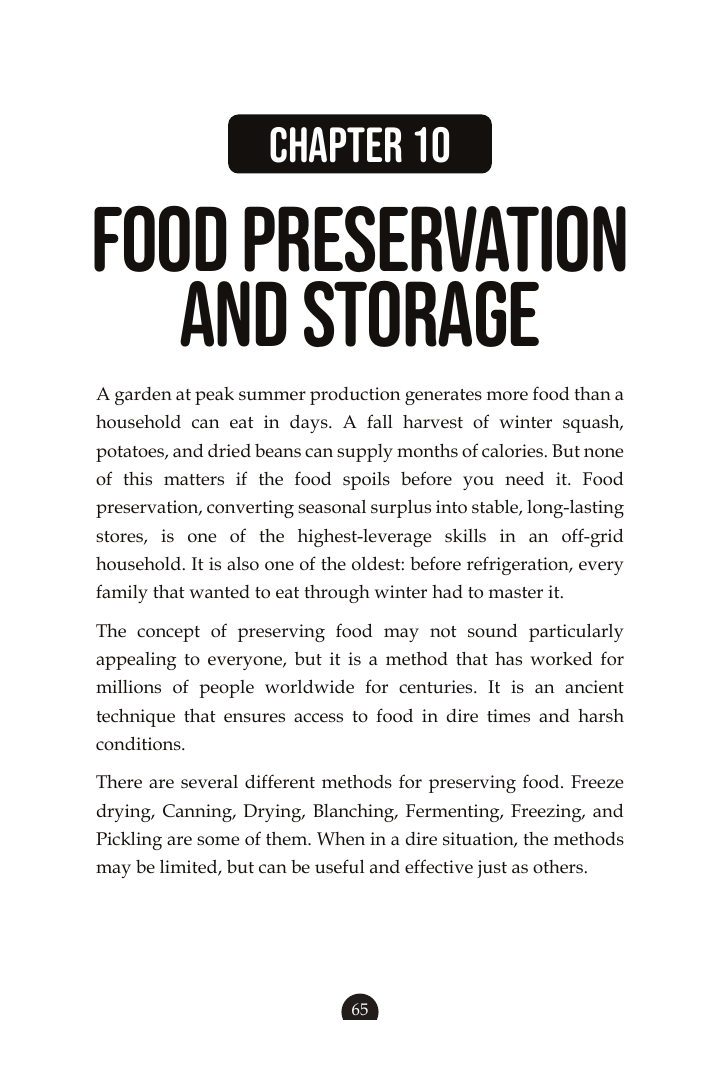
Explore emergency ration bars, cider and vinegar, a working pantry, and calorie crops.
Prepare supplies, hygiene routines, wellbeing, seasonal mood considerations, and navigation basics.
Build knowledge across hand tools, power tools, plumbing, electrical work, carpentry, firewood, and vehicles.
Build an off-grid network, plan emergency communication, consider home security, barter, and moving day.
INSIDE THE PAGES
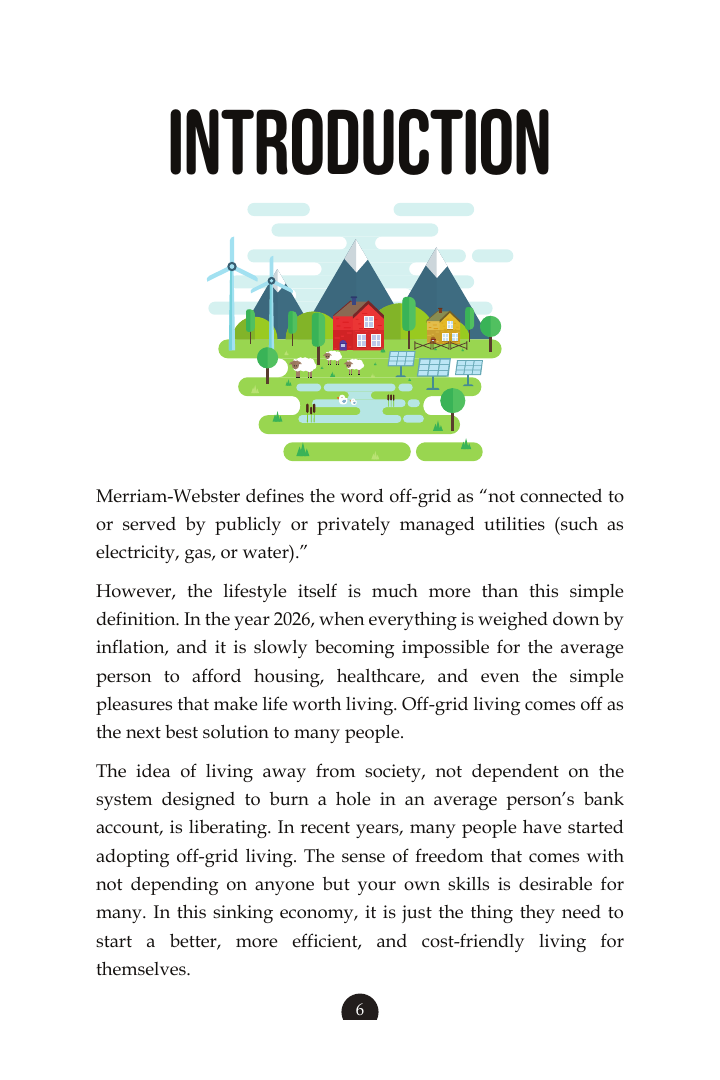
These previews are taken from the actual book so visitors can see its format, topics, and level of detail before buying.
BEFORE YOU GO OFF-GRID
The book repeatedly returns to preparation, budgeting, system design, and knowing when you need outside help.
SET EXPECTATIONS
The book focuses on a permanent, settled off-grid home and beginner-level self-reliance. It also recognizes that professional help, outside supplies, modern medicine, and community can remain necessary.
This book is educational and informational. It does not replace qualified professional advice for medical, legal, financial, engineering, electrical, water, construction, or other regulated matters.
QUESTIONS
Yes. The book explicitly focuses on helping beginners understand the practical realities and systems involved in a settled off-grid lifestyle.
Its main focus is a permanent, settled off-grid home rather than wilderness-only survival.
Yes. Chapter 5 covers energy audits, solar power, wind power, micro-hydro power, batteries, and generator use.
Yes. Chapters 6 and 7 cover water collection, filtration, purification, winter protection, greywater, blackwater, sanitation, waste, and drainage.
Yes. Chapters 8–10 cover gardening, livestock, food preservation, storage, pantry planning, and calorie crops.
The book does not present complete isolation as the practical goal. It specifically notes that some work may require professionals and that community and outside help remain important.
READY TO START?
Get The Off-Grid Survival Manual by Eric Thompson and work through the roadmap from decision-making to practical systems.
index.html before launch.